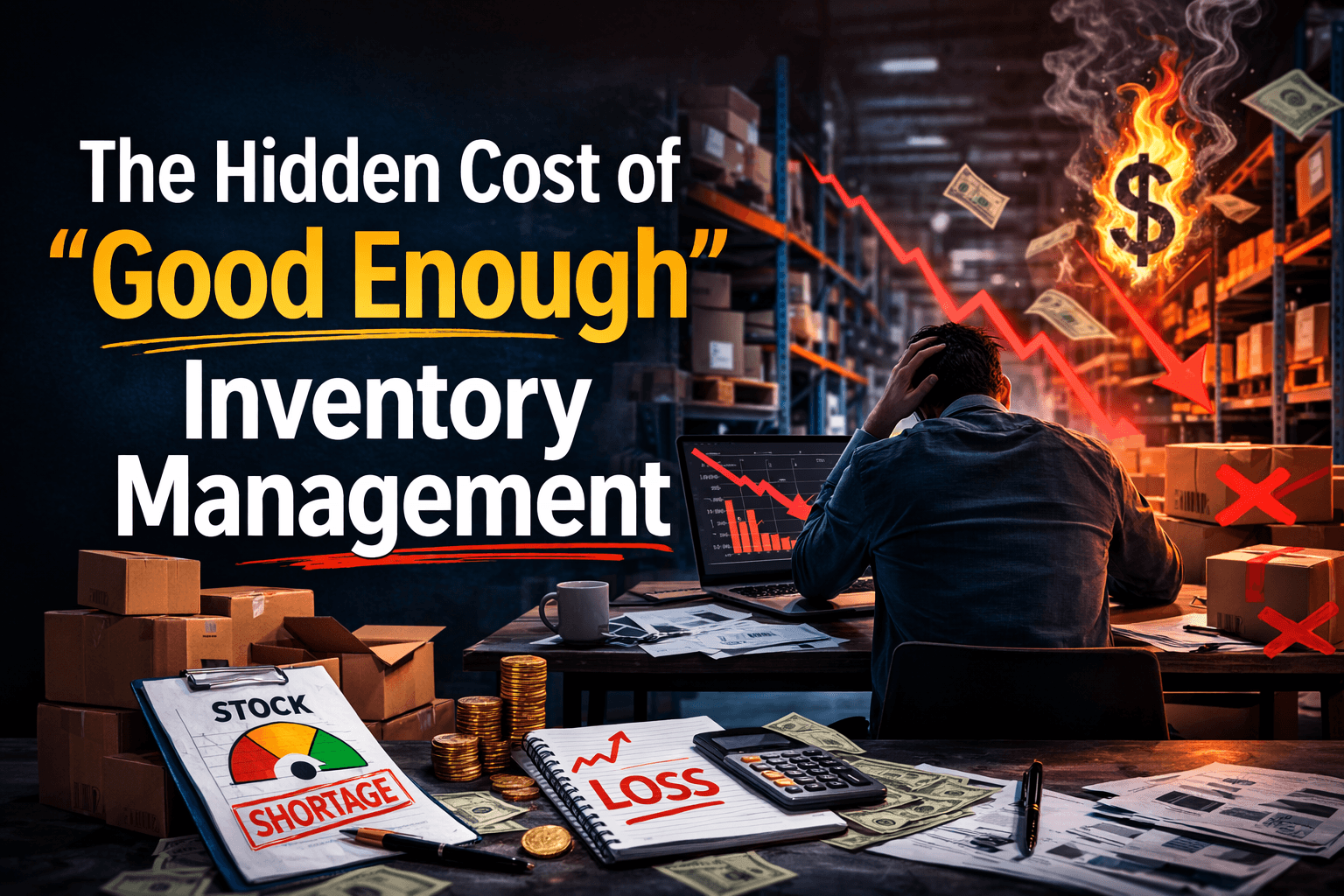
There's a moment every growing business owner knows. You're staring at your dashboard — or worse, a spreadsheet — and something just doesn't add up. A customer is waiting on an order you thought you had in stock. A product you over-ordered six months ago is quietly gathering dust in a corner of your warehouse. You tell yourself you'll fix the system next quarter.
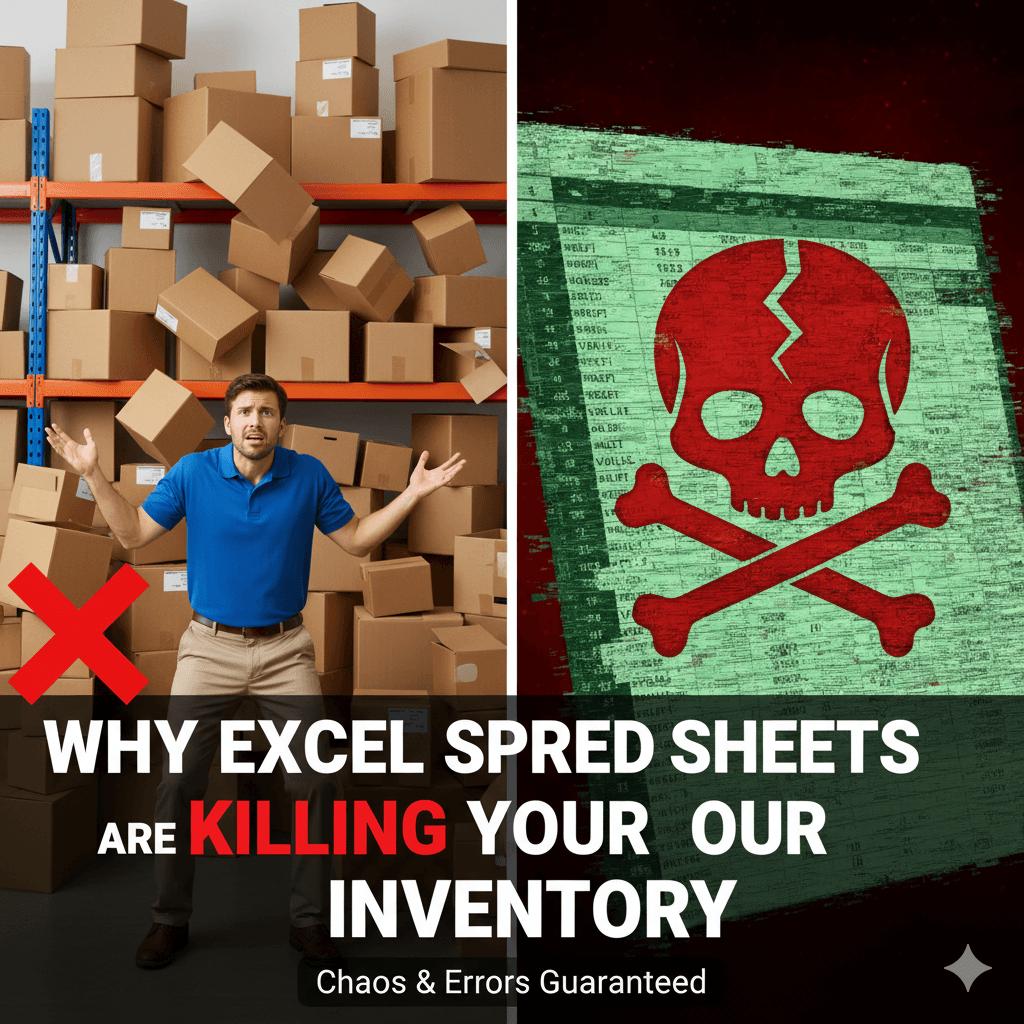
Selling across multiple channels is exciting—until you sell the same product twice because your Shopify and Amazon inventories weren't synced. Or you run out of your best-seller during a promotion. Or you discover you've been storing 500 units of a product that hasn't sold in eight months.
If you're managing inventory with Excel spreadsheets, you're not alone. Over 60% of small to medium businesses still rely on spreadsheets for inventory tracking. But here's the problem: what worked when you had 50 products and one location becomes a nightmare at scale.
In today's fast-paced business environment, inventory management can make or break your bottom line. Yet many companies continue to lose thousands—sometimes millions—in preventable losses.